

Japanese bathroom: how to style your bathroom in a Far Eastern way


What makes Japanese bathrooms special?
Japanese bathing culture is now world-famous, and public baths such as the onsen are very popular there. However, Japanese bathrooms also have some special features in private homes, which we will explain today. We’ll also show you how you can bring a touch of Japan into your own bathroom without extensive renovations.
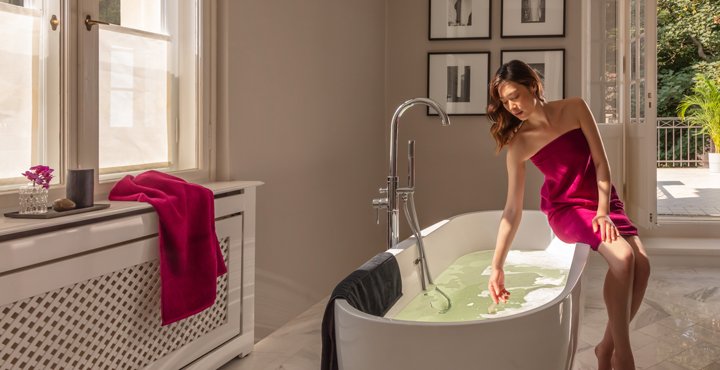
What areas does a Japanese bathroom have?
In Japan, bathrooms are usually divided into different areas: a wet area and a dry area. The dry area is a kind of antechamber with a sink and storage furniture for towels or cleaning supplies. The toilet is separated from this—sometimes in its own small room, or sometimes separated by a sliding door to ensure privacy.
The wet area is called ofuro, and its centerpiece is the bathtub. No matter how small Japanese apartments may be, the bathtub is very important. It doesn’t need to be large, as it is typically a sitting tub. Even if you want to shower in the ofuro, this is not a problem: the room is usually tiled from top to bottom and has drains in the floor, so it can be used entirely as a shower.
The bathtub as a place of relaxation
If you want to clean yourself, you can use a handheld shower or a bucket of water, but the bathtub in Japanese bathrooms is a place for relaxation. Here, you sit and unwind—usually after already having cleaned yourself. You wash beforehand and then step into the tub to cleanse not just your body, but also your mind.
Technical innovations, known from Japanese toilets, can also be found in the ofuro: in some cases, the bathtub can be closed, and the water temperature or flow can be controlled via a panel. In Japan, soap or bath additives are usually not used. This allows the bathwater to be drained the next day and reused, for example for doing laundry.
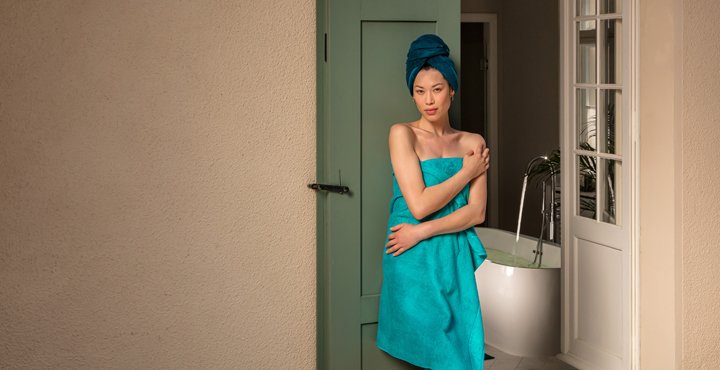
Interior ideas for a Japanese-inspired bathroom
The Japanese interior style is generally considered clean and minimalist. Materials like wood or colors like black are often associated with Japan. A wooden bathtub or bathroom furniture in a wood look, as well as dark walls, therefore evoke Japanese bathrooms and are very popular among interior designers.
You can also draw inspiration from Japanese bathrooms when it comes to fixtures: the faucet is often extendable. This leaves more space in the sink, allowing you to bathe a baby or wash clothes there.
If you like the many functions of Japanese sanitary products, you can also purchase them in Germany—but they are quite expensive and therefore more for enthusiasts.
These towels suit a Japanese theme
Whether you choose a minimalist, functional bathroom or one with warm wood tones and organic shapes, you can also bring a Japanese flair into your bathroom through terry products: the classic Japanese tenugui is a very colorful towel, but it only partially matches European aesthetics. If you associate Japan with natural materials and subtle colors, the collections MÖVE CALM ESSENCE or MÖVE WELLNESS are ideal for a bathroom with a Japanese feel. Likewise, the soft, subtly shimmering towels from the MÖVE BAMBOO LUXE collection—with their rich colors and unique cotton-bamboo blend—can instantly turn any bathroom into an attractive wellness oasis with an Eastern-inspired atmosphere.