

Cleaning tiles in the bathroom: how to get everything hygienically clean
Why you should clean bathroom tiles regularly
Clean tiles in the bathroom are not only visually appealing, but also a sign of hygiene. Dirt, soap residue, and limescale deposits provide an ideal breeding ground for germs, so regular cleaning is essential to maintain a sparkling, clean result. Regular means: depending on the number of household members and bathroom users, at least once a week. The most important step is wet cleaning of floor tiles. Other tiles, such as those in the shower or on the walls, should also be cleaned from time to time.
Home remedies or chemical cleaners?
Of course, there are special bathroom and tile cleaners available in stores, but you can also use other cleaning agents or household remedies to remove grease, soap, or dirt.
Dish soap and rinse aid
Dishwashing liquid and rinse aid from the kitchen are great for removing grease stains and giving smooth surfaces a shine. Therefore, you can also use both diluted for cleaning tiles. Afterwards, the tiles should be rinsed with clean water and dried.
Vinegar, citric acid, and baking soda
Natural cleaners such as vinegar or citric acid, as well as baking powder or baking soda, are a sustainable solution and help against limescale or early-stage mold. When combining baking soda with vinegar or citric acid, surfactants are formed that are particularly effective against grease and limescale deposits. It is important to be careful with grout, as it is often more sensitive than tiles and can be damaged.
Similar to citric acid, lemon or orange peels can also be used. Instead of throwing them away, you can use them to remove limescale. Simply rub the inside of the peel over the deposits, let it sit for a while, and then wipe with clean water.
All-purpose and glass cleaners
Conventional glass or all-purpose cleaners are also suitable for normally soiled tiles. However, make sure to dry the tiles afterwards to prevent further limescale buildup or water spots. This method is especially practical for bathroom floor tiles.
What helps with heavy dirt?
Vinegar is actually very effective against limescale. Simply add some vinegar to warm water and wipe the tiles with it. If that is not enough, you can carefully use a ceramic hob scraper to remove the limescale after the cleaner has had time to work.
If the tiles are heavily discolored or stubborn dirt cannot be removed even after a long exposure time of the cleaning agents, you can use a steam cleaner. You don’t necessarily have to buy one, as some hardware stores or drugstores offer these devices for rent.
Pay attention to the material
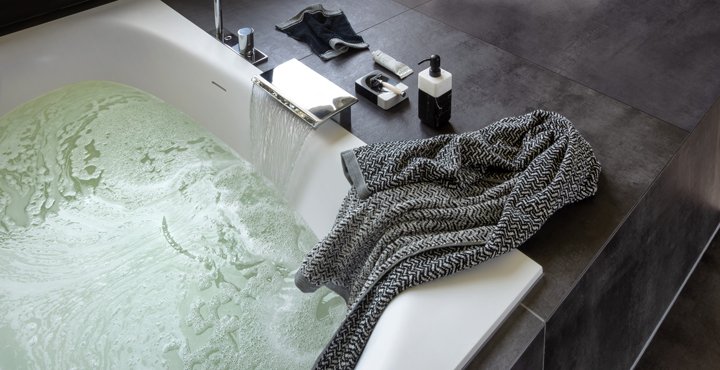
Bathroom tiles can be made from different materials, some of which are very robust while others are more sensitive. For ceramic or porcelain tiles, you can also use cleaners or household remedies that contain acids. However, natural stone is more easily damaged by these, so it’s best to test on an inconspicuous area first. Alternatively, you can use specially designed cleaning products that are gentler.
When using cleaning products that contain care additives, you should be careful in the bathroom, as these can lead to deposits more quickly, which can negatively affect especially ceramic surfaces.