
Beach Towel: Functional Essentials for Summer


As temperatures rise, choosing the right essentials for the beach, outdoor pool or garden becomes increasingly important. A high-quality beach towel serves far more purposes than a standard bathroom textile: it functions as a comfortable surface to lie on, provides protection from the ground and absorbs moisture after swimming or bathing. This article explores the key quality features, material differences and selection criteria for the ideal beach towel.
Beach Towel vs Bath Towel: Understanding the Difference
Although the terms are often used interchangeably in everyday language, there are significant differences between a beach towel and a traditional bath towel. A bath towel is primarily designed for indoor use, usually woven more densely and optimised for maximum absorbency after showering.
A beach towel, on the other hand, generally offers a larger surface area and is often designed to remain lightweight and easy to carry despite its size, while drying more quickly. Many beach textiles also feature a special weave structure – such as velour on the upper side – which helps minimise sand sticking to the fabric, while the reverse side is made from absorbent terry towelling. Piqué fabric is also a popular choice due to its quick-drying properties.
While bath towels usually have ample time to dry after use, beach towels are often heavily used during holidays or throughout the swimming season and may be required several times a day.
Quality Features: What Makes a High-Quality Beach Towel
The quality of a good beach towel is primarily reflected in the fibre quality, edge finishing and durability of the fabric. Premium models retain their shape, softness and colour even after repeated washing and prolonged exposure to saltwater, chlorine and UV rays. Reinforced hems help prevent fraying, while excellent colour fastness ensures bright summer shades do not fade.
These characteristics depend not only on careful craftsmanship but also on the quality of the raw materials used.
An Overview of Materials and Weave Types
Depending on personal preference and intended use, different materials offer distinct advantages:
- Lightweight cotton terry beach towels: The classic among bath textiles. The characteristic cotton loops create volume, offer exceptional softness and absorb moisture effectively.
- Hammam towels (Peshtemal): These flat-woven cotton towels – often finished with fringed ends – are extremely lightweight, compact and quick-drying. They also work well as a sarong or shoulder wrap.
- Muslin beach towels: A particularly on-trend, multi-layered cotton fabric. Muslin is known for its naturally crinkled appearance, exceptional softness and breathable feel against the skin, although it is generally less durable.
- Microfibre beach towels: These synthetic towels are exceptionally thin, lightweight and highly compact. They dry very quickly and release sand easily, although they do not offer the traditionally soft feel of natural fibres.
Material Comparison: Cotton vs Microfibre
When choosing between the two most popular material groups, practical functionality plays an important role.
As a natural fibre, cotton offers excellent skin-friendliness, superior absorbency and a comfortable feel when lying on it. Even when wet, cotton remains highly tear-resistant and durable. However, it tends to be heavier when damp and takes longer to dry.
Microfibre, by contrast, stands out due to its lightweight feel and compact pack size, making it ideal for backpacking trips or sports use. However, some people find synthetic fibres less pleasant against the skin, and the material may absorb odours more quickly if stored while damp. In terms of sustainability, microfibre also performs less favourably.
Lighter alternatives to traditional cotton terry include innovative yarns such as Airspin, which retain the beneficial properties of cotton while reducing overall weight. Fabrics such as piqué or muslin are also lighter options.
Dimensions and Weight: Popular Beach Towel Sizes
A standard beach towel generally starts at around 80 x 160 cm or 90 x 180 cm, while larger XL versions often measure 100 x 200 cm or even include double-sized options for two people.
The weight of a beach towel depends largely on the material and fabric density, measured in grams per square metre (g/m²). A classic premium terry beach towel typically weighs between 400 and 800 grams, depending on size. Lightweight alternatives such as hammam or piqué towels often weigh only 200 to 350 grams, helping reduce luggage weight during travel.
The Ideal Beach Day Essentials: SUMMER DAYLIGHT
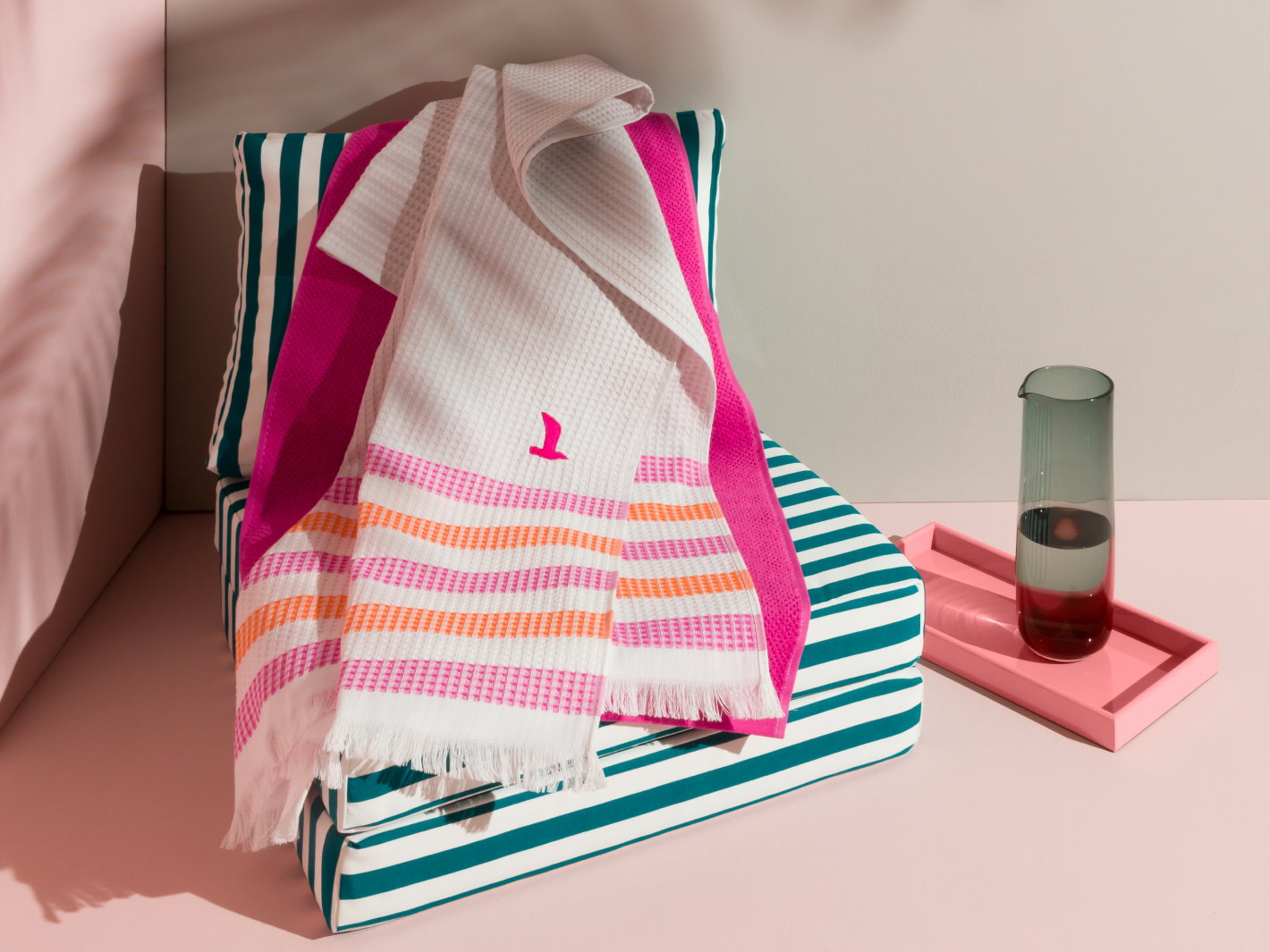
For a practical yet stylish day by the sea or pool, this year’s MÖVE SUMMER DAYLIGHT beach collection offers a coordinated range centred around lightweight, premium beach towels. Designed to evoke an effortless Mediterranean lifestyle, the collection features rich tones and relaxed elegance. Made from 100% premium cotton, the coloured waffle piqué fabric gives the towel an airy appearance, while the reversed colour design on the back creates vibrant contrasts. Subtle detailing further enhances the playful aesthetic.
The beach towel range is complemented by practical beach essentials in vibrant colours designed to maximise comfort by the water. These include a spacious waffle piqué beach bag for carrying essentials, as well as an airy kaftan and practical muslin poncho. Together, these textiles create a seamless transition from beach to promenade, combining relaxed style with exceptional comfort for sunny moments at home or on holiday.